Showing posts with label Cloud computing. Show all posts
Advantages and disadvantages of using cloud computing
There are several advantages that can be seen from the development of this Cloud Computing, among others:
But in addition to many benefits, but there are also effects that can be generated by using cloud computing, including:
Hopefully the above explanation can give inspiration to improve the safety and comfort in performing a computation as well as provide insights into cloud computing itself.
READ MORE - Advantages and disadvantages of using cloud computing
- More efficient because it uses a low budget for resources;
- Make more eglity, can easily be oriented to profit and rapid development;
- Make operational and management easier, possible because of personal or corporate systems that are connected in a single cloud can be easily monitored and regulated;
- Koloborasi make a trusted and more slender;
- Assist in suppressing the operating costs of capital costs as we increase the reliability and critical information systems we build.
But in addition to many benefits, but there are also effects that can be generated by using cloud computing, including:
- The data that we upload to a database where we do cloud computing, in case of maintenance and can not be repaired, most likely our data will be lost and can not return;
- Requires a fairly fast internet connection;
- Security issues in the hack-prone data.
Hopefully the above explanation can give inspiration to improve the safety and comfort in performing a computation as well as provide insights into cloud computing itself.
About Cloud Computing on Wikinvest.com
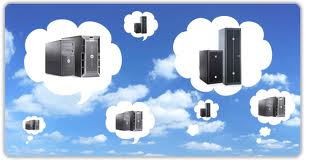
Cloud computing is a technology that uses the internet and central remote servers to maintain data and applications. Cloud computing allows consumers and businesses to use applications without installation and access their personal files at any computer with internet access. This technology allows for much more efficient computing by centralizing storage, memory, processing and bandwidth.
A simple example of cloud computing is Yahoo email or Gmail etc. You dont need a software or a server to use them. All a consumer would need is just an internet connection and you can start sending emails. The server and email management software is all on the cloud ( internet) and is totally managed by the cloud service provider Yahoo , Google etc. The consumer gets to use the software alone and enjoy the benefits. The analogy is , 'If you only need milk , would you buy a cow ?' All the users or consumers need is to get the benefits of using the software or hardware of the computer like sending emails etc. Just to get this benefit (milk) why should a consumer buy a (cow) software /hardware ?
Cloud computing is broken down into three segments: "applications," "platforms," and "infrastructure." Each segment serves a different purpose and offers different products for businesses and individuals around the world. In June 2009, a study conducted by VersionOne found that 41% of senior IT professionals actually don't know what cloud computing is and two-thirds of senior finance professionals are confused by the concept, highlighting the young nature of the technology. In Sept 2009, an Aberdeen Group study found that disciplined companies achieved on average an 18% reduction in their IT budget from cloud computing and a 16% reduction in data center power costs Next >
READ MORE - About Cloud Computing on Wikinvest.com
A simple example of cloud computing is Yahoo email or Gmail etc. You dont need a software or a server to use them. All a consumer would need is just an internet connection and you can start sending emails. The server and email management software is all on the cloud ( internet) and is totally managed by the cloud service provider Yahoo , Google etc. The consumer gets to use the software alone and enjoy the benefits. The analogy is , 'If you only need milk , would you buy a cow ?' All the users or consumers need is to get the benefits of using the software or hardware of the computer like sending emails etc. Just to get this benefit (milk) why should a consumer buy a (cow) software /hardware ?
Cloud computing is broken down into three segments: "applications," "platforms," and "infrastructure." Each segment serves a different purpose and offers different products for businesses and individuals around the world. In June 2009, a study conducted by VersionOne found that 41% of senior IT professionals actually don't know what cloud computing is and two-thirds of senior finance professionals are confused by the concept, highlighting the young nature of the technology. In Sept 2009, an Aberdeen Group study found that disciplined companies achieved on average an 18% reduction in their IT budget from cloud computing and a 16% reduction in data center power costs Next >
What cloud computing really means
Cloud computing is all the rage. "It's become the phrase du jour," says Gartner senior analyst Ben Pring, echoing many of his peers. The problem is that (as with Web 2.0) everyone seems to have a different definition. As a metaphor for the Internet, "the cloud" is a familiar cliché, but when combined with "computing," the meaning gets bigger and fuzzier. Some analysts and vendors define cloud computing narrowly as an updated version of utility computing: basically virtual servers available over the Internet. Others go very broad, arguing anything you consume outside the firewall is "in the cloud," including conventional outsourcing.
Cloud computing comes into focus only when you think about what IT always needs: a way to increase capacity or add capabilities on the fly without investing in new infrastructure, training new personnel, or licensing new software. Cloud computing encompasses any subscription-based or pay-per-use service that, in real time over the Internet, extends IT's existing capabilities. Cloud computing is at an early stage, with a motley crew of providers large and small delivering a slew of cloud-based services, from full-blown applications to storage services to spam filtering. Yes, utility-style infrastructure providers are part of the mix, but so are SaaS (software as a service) providers such as Salesforce.com. Today, for the most part, IT must plug into cloud-based services individually, but cloud computing aggregators and integrators are already emerging.
READ MORE - What cloud computing really means
Cloud computing comes into focus only when you think about what IT always needs: a way to increase capacity or add capabilities on the fly without investing in new infrastructure, training new personnel, or licensing new software. Cloud computing encompasses any subscription-based or pay-per-use service that, in real time over the Internet, extends IT's existing capabilities. Cloud computing is at an early stage, with a motley crew of providers large and small delivering a slew of cloud-based services, from full-blown applications to storage services to spam filtering. Yes, utility-style infrastructure providers are part of the mix, but so are SaaS (software as a service) providers such as Salesforce.com. Today, for the most part, IT must plug into cloud-based services individually, but cloud computing aggregators and integrators are already emerging.
What is Cloud Computing ?
Cloud computing means using multiple server computers by a digital network, as though they were computer. Often, the services obtainable are thought about part of cloud computing. Historicallyin the past, without a cloud, a web server runs as a single computer or a group of privately owned computers. The computer(s) are powerful to serve a given amount of requests per minute & can do so with a positive amount of latency per request. If the computer's web-site or web application suddenly becomes more popular, & the amount of requests are far over the net server can handle, the response time of the requested pages will be increased due to overloading. On the other hand, in times of low load much of the capacity will go unused.
If the net site, service, or web application is hosted in a cloud, however, additional processing & compute power is obtainable from the cloud provider. The net site would share those servers with perhaps thousands of other sites varying size & memory. If the net site suddenly becomes more popular, the cloud can automatically direct more individual computers to work to serve pages for the site, & more money is paid for the additional usage. If it becomes unpopular, however, the amount of money due will be less. Cloud computing is popular for its pay-as-you-go pricing model.
Cloud computing visual diagram
Clouds are sometimes set up within huge corporations, or other institutions, so that lots of users all share the same server power. As computer power gets cheaper, lots of different applications are provided & managed by the cloud server. In lots of cases, users might not download & install applications on their own gizmo or computer; all processing & storage is maintained by the cloud server.
READ MORE - What is Cloud Computing ?
If the net site, service, or web application is hosted in a cloud, however, additional processing & compute power is obtainable from the cloud provider. The net site would share those servers with perhaps thousands of other sites varying size & memory. If the net site suddenly becomes more popular, the cloud can automatically direct more individual computers to work to serve pages for the site, & more money is paid for the additional usage. If it becomes unpopular, however, the amount of money due will be less. Cloud computing is popular for its pay-as-you-go pricing model.
Cloud computing visual diagram
Clouds are sometimes set up within huge corporations, or other institutions, so that lots of users all share the same server power. As computer power gets cheaper, lots of different applications are provided & managed by the cloud server. In lots of cases, users might not download & install applications on their own gizmo or computer; all processing & storage is maintained by the cloud server.
Subscribe to:
Posts (Atom)


